
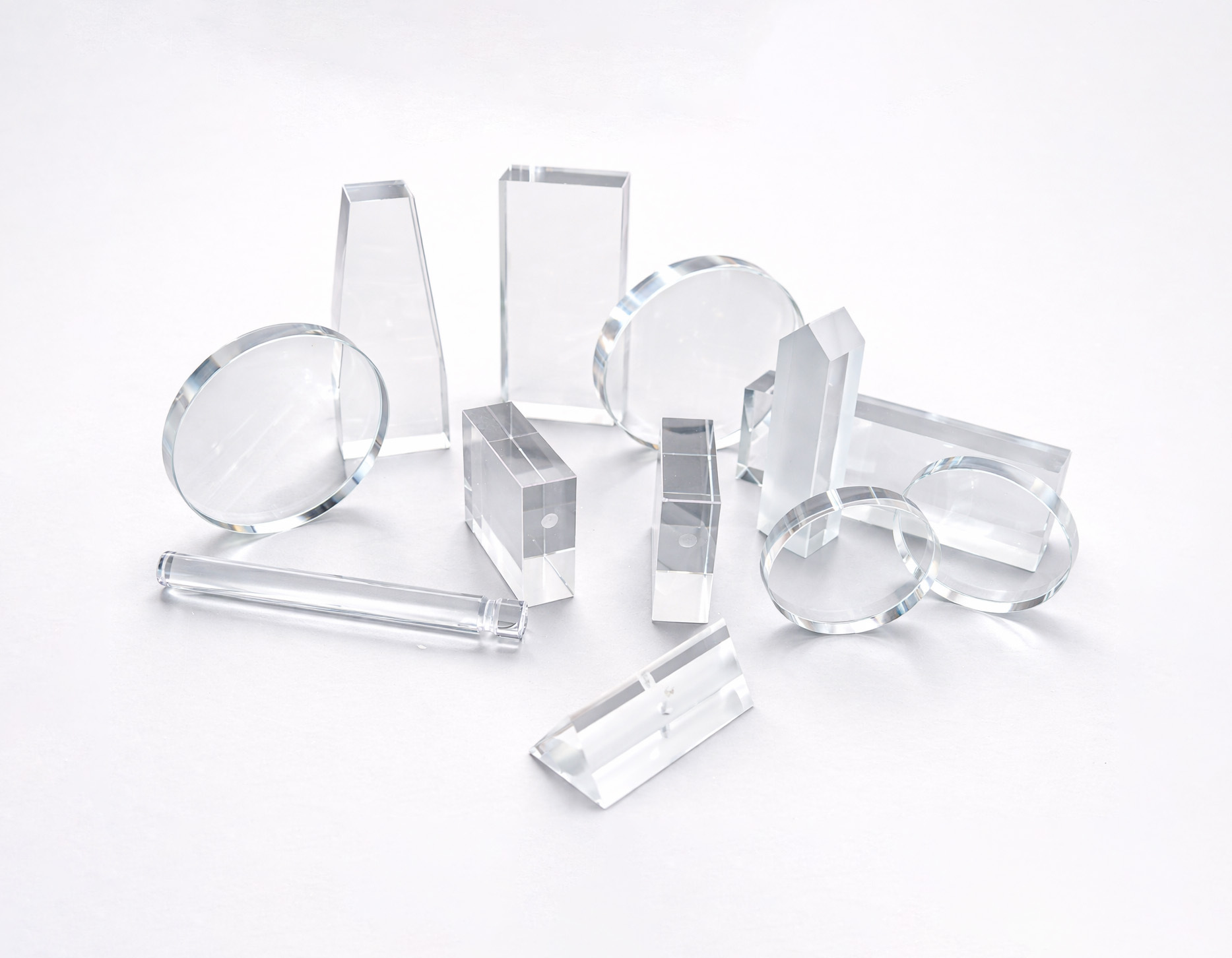
In our previous blog, we explained what sapphire windows are, how they are manufactured, and the material characteristics that make them suitable for demanding applications. This blog explores the key benefits of sapphire windows, including their mechanical strength, thermal stability, chemical resistance and optical performance.
Download our Buyers Guide to Sapphire Windows for a technical overview of sapphire window properties, manufacturing processes, performance and key considerations.
Sapphire windows are selected for applications where high durability, environmental resistance and reliable optical performance are required. Compared with conventional glass or polymer materials, sapphire offers a combination of mechanical strength, thermal stability, chemical resistance and optical performance for demanding environments.
Mechanical Performance of Sapphire Windows
One of the key benefits of sapphire windows is their exceptional mechanical performance. Sapphire is an extremely hard material, with a Mohs hardness of 9 and high compressive strength typically around 2,000 MPa.
This hardness provides strong resistance to scratching and surface abrasion, while sapphire’s mechanical strength allows it to withstand pressure loading better than many transparent materials.
Thermal Stability of Sapphire Windows
Sapphire maintains reliable performance in both high-temperature environments and cryogenic conditions. Unlike polymer materials, sapphire does not soften under heat and maintains dimensional stability when exposed to temperature changes.
This thermal stability makes sapphire windows suitable for demanding applications involving elevated temperatures, thermal cycling, furnace observation and laser systems.
Chemical Resistance of Sapphire Windows
Sapphire provides excellent chemical resistance and remains stable when exposed to many acids, solvents and sterilisation agents used in semiconductor, industrial and medical environments.
This chemical stability supports long-term service life in aggressive process conditions where other transparent materials may experience degradation. Sapphire also provides high resistance to hydrofluoric acid in certain conditions.
Optical Performance of Sapphire Windows
Sapphire windows provide optical transmission across ultraviolet, visible and portions of the infrared spectrum. The practical transmission range depends on factors including material quality, thickness and surface condition.
By combining optical transmission with strong mechanical and environmental resistance, sapphire windows provide reliable optical access in demanding applications. Factors such as window thickness, diameter and mounting design should be considered to ensure the material properties support reliable system performance.
Sapphire Windows Performance Benefits
The key advantage of sapphire windows is their ability to combine mechanical strength, thermal stability, chemical resistance and optical performance within a single material.
This combination allows sapphire windows to perform reliably in demanding operating conditions where transparent components must withstand mechanical stress, temperature variation and chemical exposure while preserving optical clarity.
Contact us to discuss your sapphire window requirements and find the right solution for your application.